
For the world's rarest and most coveted pennies, values are well over $100,000 and approaching $2 million. That's a lot for a little piece of copper. Rarity is a significant factor in determining a penny's worth. Condition is another; coins that stayed out of circulation may retain their original coloring and fine details, significantly adding to their value. Some coins are made more valuable simply by being unintentional, as with the 1943 Lincoln pennies mistakenly made with bronze rather than steel.
It also comes down to demand. As a serious collector, you eventually reach the point where you need to purchase your coins from a coin dealer or at auction to achieve the quality you want. Since pennies hold a special place in almost every coin collector's heart, demand for high-quality coins can drive the value through the roof.
Rare Pennies
Read on to find out what makes these 16 coins the most valuable U.S. pennies, based on over 250,000 public records and auction sales figures.
- 1914-S Lincoln Penny
- 1944-D Lincoln Penny (Zinc-coated steel)
- 1909-S VDB Lincoln Penny
- 1872 Indian Head Penny
- 1969-S Lincoln Penny-Doubled Die Obverse
- 1926-S Lincoln Penny
- 1877 Indian Head Penny
- 1914-D Lincoln Penny
- 1864 Indian Head Penny-"L" on Ribbon
- 1943 Lincoln Penny (Bronze Alloy)
- 1856 Flying Eagle Cent
- 1909 Lincoln Penny (VDB Matte Proof )
- 1943-S Lincoln Penny (Bronze)
- 1958 Lincoln Penny (Double Die Obverse)
- 1944-S Lincoln Penny (Steel)
- 1943-D Lincoln Penny (Bronze)
Watch Now: The Most Valuable Indian Head Penny
- 01of 16
1914-S Lincoln Penny
Credit: Professional Coin Grading Service (PCGS)
- Value: $105,800
- Grade: PCGS MS-66 Red
- Sold: August 2006; Bowers & Merena, Anne Kate Collection Part II
The 1914-S Lincoln cent is by no means a rare coin. After all, the San Francisco Mint minted over 4 million of them. What makes this particular coin shown above extremely valuable is its pristine condition despite being over 100 years old. There is no noticeable bag mark on the coin's surface, and it has retained its original bright red-orange copper color.
For a coin like this to survive so long in pristine condition, it is evident that a collector in San Francisco in 1914 must have set it aside before it could become tattered and worn in circulation. The collector probably also ensured the coin was correctly stored to preserve its color. Coins in this condition are few and far between and truly treasures to behold.
- 02of 16
1944-D Lincoln Penny on a Zinc-Coated Steel Planchet
Credit: Heritage Auctions, HA.com Value: $115,000
Grade: NGC MS-63
Sold: August 2007; Heritage Auctions, Milwaukee, WI, ANA Signature Coin Auction
A 1944 Lincoln penny struck at the Denver, Colorado Mint facility is nothing special. The United States Mint struck over 430 million of them. What makes this coin extremely valuable is the fact that it was struck on a zinc-coated steel planchet. These steel planchets were used primarily in 1943. However, after many complaints, the United States Mint returned to the regular copper planchets in 1944.
However, a steel planchet from 1943 must have found its way into the coining press. This stray planchet created a great rarity treasured by coin collectors, and they are willing to pay handsomely to add this coin to their collection.
- 03of 16
1909-S VDB Lincoln Penny
Credit: James Bucki Value: $117,500
Grade: PCGS MS-67 Red
Sold: March 2014; Heritage Auctions, Atlanta, GA, ANA National Money Show US Coins Signature Auction
In 1909, The United States Mint replaced the Indian Head penny with the Lincoln cent. Victor David Brenner created the design for this coin under the auspices of President Theodore Roosevelt. Brenner added his initials V.D.B. to the coin's reverse, at the bottom between the two wheat stalks. Up to this point, coin designers used only the first initial of their last name. To have all three initials on a coin's design was unheard of.
Slightly less than a half-million of these pennies were minted before the Treasury Department demanded that the initials be removed. This made the coins overnight sensations among coin collectors, and the pennies have become known as the "Holy Grail" for collectors of Lincoln cents.
- 04of 16
1872 Indian Head Penny
Credit: Heritage Auctions, HA.com
Value: $126,500
Grade: PCGS MS-67 Red
Sold: August 2007; Heritage Auctions, Milwaukee, WI, ANA Signature Coin Auction
An 1872 Indian Head penny is scarce, but you can likely find it at any coin show or coin dealer in circulated grades. Slightly more than 4 million of these pennies were minted. However, the financial hardship of the time (including the economic downturn following the "Panic of 1873") meant few people could save coins for their collections. As a result, most of these pennies went into circulation.
What makes this coin shown above extremely rare is its exceptional condition that combines a nearly flawless coin with a sharp strike from a fresh set of coin dies. Additionally, it has been sufficiently well preserved to retain its original bright red-copper color.
- 05of 16
1969-S Lincoln Penny–Doubled Die Obverse
Credit: Heritage Auctions, HA.com
Value: $126,500
Grade: PCGS MS-64 Red
Sold: January 2008; Heritage Auctions, Orlando, FL, FUN Signature Coin Auction
A 1969-S Lincoln Penny-Doubled Die Obverse was first discovered in 1970, and Coin World reported on it on the front page of its July 8, 1970 edition. Initially, the government believed these were counterfeit coins and began confiscating them. They confiscated and destroyed five of these coins before acknowledging them as genuine.
This penny exhibits doubling on the date and lettering on the obverse. Although the doubling is not as dramatic as the 1955 doubled die obverse, it is evident with low-level magnification. These coins in circulated condition are also valuable, but uncirculated coins are extremely rare.
- 06of 16
1926-S Lincoln Penny
Credit: Heritage Auctions, HA.com
Value: $149,500
Grade: PCGS MS-65 Red
Sold: January 2006; Heritage Auctions, Orlando, FL, FUN Signature Auction
On the surface, there is nothing visually spectacular about this coin. While it is uncirculated and retains its original copper-red color from the day it was minted, the date and mintmark combination sets this coin apart.
One factor contributing to this coin's significant value is its low mintage. Only nine other Lincoln wheat pennies have a lower mintage. Also, in the 1930s and 40s, most coin collectors acquired their coins from circulation, so it is not hard to find a circulated example of a 1926-S Lincoln penny. But it is scarce to find an uncirculated 1926-S Lincoln penny with its original copper-red color.
- 07of 16
1877 Indian Head Penny
Credit: Heritage Auctions, HA.com
Value: $149,500
Grade: PCGS MS-66 Red
Sold: August 2007; Heritage Auctions, Milwaukee, WI, ANA Signature Coin Auction
This penny is the rarest date of all the Indian Head pennies ever minted. In 1877, the economic slump that began in 1873 continued with full force. As a result, demand for United States coinage was at an all-time low, and families struggled to make ends meet. As a result, saving even a penny for a coin collection was not an option for most Americans.
Although the 1909-S Indian Head Penny has a smaller mintage, more were saved in uncirculated condition. To hold an 1877 Indian Head Penny in uncirculated condition is an extreme rarity, given the poor economic conditions of that year. Having one in its original copper-red color makes it much more extraordinary.
- 08of 16
1914-D Lincoln Penny
Credit: Heritage Auctions, HA.com
Value: $152,750
Grade: PCGS MS-66+ Red
Sold: August 2017; Heritage Auctions, Denver, CO, ANA U.S. Coins Signature Auction
This coin was heavily circulated and commonly subjected to the widespread use of "penny boards" in the 1930s and 40s, which people used to collect coins from circulation. As a result, most of the 1941-D Lincoln pennies are in circulated condition. An uncirculated example in its original mint state and with its original red color is extremely rare and valuable.
- 09of 16
1864 Indian Head Penny–"L" on Ribbon
Credit: Heritage Auctions, HA.com
Value: $161,000
Grade: PCGS PR-65 Red & Brown
Sold: October 2011; Heritage Auctions, Pittsburgh, PA, Signature Auction
In 1864, the Civil War was dragging on, and the United States economy was extremely fragile. Many citizens hoarded gold, silver, and copper coins as a store of wealth. This made it difficult for the federal government to obtain the metal to mint coins.
The Indian Head penny was designed by mint engraver James B. Longacre and first issued in 1859. Approximately halfway through the mintage of 1864 pennies, an "L" was added to the tail of the ribbon in the war bonnet on Lady Liberty's head. It is estimated that only 5 million of these coins were made, and very few of them were saved in uncirculated condition.
- 10of 16
1943 Lincoln Cent Struck on Bronze Alloy
Credit: Professional Coin Grading Service (PCGS)
Value: $164,500
Grade: PCGS MS-63 Red
Sold: January 2013; Stack's Bowers Galleries, Americana Auction
This 1943 Lincoln penny should have been struck on a zinc-plated steel planchet but was, in fact, made with a bronze alloy planchet. Although there is some argument that mint workers actually struck these coins on bronze alloy planchets on purpose, it is more probable that a few bronze planchets left over from the previous year got stuck on a conveyor belt or tote and were incorporated into the regular striking process.
Since most people do not look at the date on every coin they receive in change, some of these 1943 bronze alloy pennies circulated for a while before being snatched up by an alert coin collector intent on cherry-picking the valuable Lincoln penny out of circulation. The high value of this coin is due to its uncirculated condition and original copper-red color.
- 11of 16
1856 Flying Eagle Cent
Credit: Heritage Auctions, HA.com
Value: $172,500
Grade: PCGS MS-66
Sold: January 2004; Heritage Auctions, Orlando, FL, FUN Signature Auction
In 1856, the price of copper rose to the point that it took more than a penny's worth of copper to make a penny. Before this date, pennies were large and bulky and were almost the size of a half-dollar. To lower costs, the United States Mint sought to reduce the size of the penny (to its current diameter). However, the move needed congressional approval, so the mint produced a batch of about 800 of the new pennies and presented them to lawmakers.
Any one of these coins in circulated or uncirculated condition is extremely rare. When an example as fine as this one crosses the auction block, it is certain to set record prices.
- 12of 16
1909 VDB Matte Proof Lincoln Penny
Credit: Heritage Auctions, HA.com
Value: $258,500
Grade: PCGS PR-67 Red & Brown
Sold: August 2014; Heritage Auctions, Chicago, IL, ANA US Coins Signature Auction
As with the 1909-S VDB Lincoln Penny, this highly valued penny proof bears all three of the coin designer's initials: "VDB." Only 1,194 of these proof coins were struck at the Philadelphia Mint before the Treasury Department dictated that the designer's initials be removed. The low mintage alone makes this coin extremely rare, but the brilliant colors that resulted from a coin being stored for 100 years make this coin extremely attractive to collectors.
- 13of 16
1943-S Lincoln Cent Struck on Bronze
Credit: Heritage Auctions, HA.com
Value: $282,000
Grade: PCGS AU-58
Sold: February 2016; Heritage Auctions, Long Beach, CA, US Coins Signature Auction
The 1943-S Lincoln Cent Struck on Bronze is the second example of a 1943 Lincoln penny that should have been struck on a zinc-plated steel planchet but was instead coined on a bronze planchet. The San Francisco Mint produced six known examples of this error in 1943.
This is the second-lowest number of 1943 Lincoln pennies on bronze planchets produced at any United States Mint location. Since this coin exhibits evidence of circulation, it must have exited the mint via regular distribution channels. Coins in higher grades are suspected of having been helped by a mint employee.
- 14of 16
1958 Doubled Die Obverse Cent
Credit: Stacks Bowers
Value: $336,000
Grade: PCGS MS-64 RD
Sold: March 2018; Stacks Bowers; Baltimore - Session 3 - Rarities Night Including the ESM Collection
The 1958 Doubled Die Obverse Cent is among the most exceedingly rare and intriguing Lincoln cents, not because of its date of minting but because of its die variety. As opposed to the 1955 Doubled Die Lincoln Cent, where thousands of them are known, only three 1958 Doubled Die Lincoln pennies are known to exist.
It is unknown how only three examples left the United States Mint facility in Philadelphia, but because all of them are in Mint State Red condition, it is speculated that they may have been smuggled out by an unscrupulous mint employee. Regardless of how they got out of the mint, these exceedingly rare die-variety Lincoln cents would be prized by any collector.
- 15of 16
1944-S Lincoln Steel Penny
Credit: Heritage Auctions, HA.com
Value: $373,750
Grade: NGC MS-66
Sold: August 2008; Heritage Auctions, Baltimore, MD, ANA US Coin Signature Auction
In 1944, Lincoln pennies reverted to the original bronze alloy of 95 percent copper and 5 percent tin. However, two zinc-plated steel planchets somehow ended up in the San Francisco Mint's coining press. One example circulated for a while before being picked up by a collector.
This example above is uncirculated, exceptionally well preserved, and shows minimal bag marks from the minting process. Additionally, it was extremely well-struck, as evidenced by the minutest details present on the coin. These factors together make this the second most valuable penny in the world.
- 16of 16
1943-D Lincoln Bronze Cent
Credit: Heritage Auctions, HA.com
Value: $1,700,000
Grade: PCGS MS-64BN
Sold: September 2010; Legend Numismatics, Private Sale
Accidents can produce the rarest coins. When the U.S. switched from bronze alloy to zinc-plated steel pennies in 1943, a relative handful of bronze pennies slipped through into the process. It is estimated that the Philadelphia and San Francisco Mints each released fewer than 20 1943 pennies struck on bronze alloy.
Many of these coins exhibit wear from circulation. This wear indicates that they were not "helped" by some unscrupulous mint employee. The rarest of all error coins noted above is this single known pristine example from the Denver Mint. It is the most Coin
$10 Million Penny Hunt: The 10 Rarest US Cents in Existence
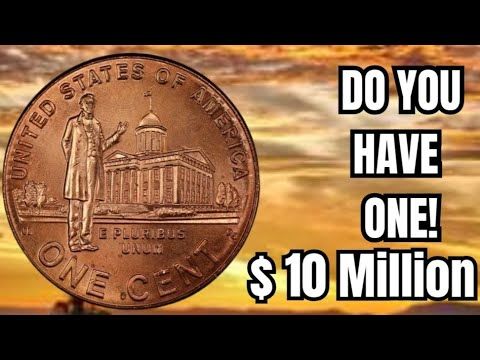
Your Pocket Change Could Hold a Life-Changing Treasure
At PennyVerse, we’ve tracked down the most valuable pennies ever minted – any one of these could be hiding in your collection! From accidental copper strikes to controversial designs, here are the 10 most legendary cents and how to spot them.
 The Ultimate Penny Hall of Fame
 1943 Bronze Lincoln Cent ($1.7M Record)
- The Mistake: Copper struck during steel-only WWII years
- Key Test: Non-magnetic + weighs 3.11g
- Known Survivors: 10-15 coins
 1944 Steel Penny ($375K Value)
- Reverse Error: Steel struck when copper returned
- Authentication: Requires XRF metal test
- Extremely Rare: Only 2 certified
 1909-S VDB ($2.5M Record)
- Designer Drama: Initials removed mid-production
- Spot It: “S” mintmark + “V.D.B.” on reverse
- Mintage: Just 484,000 made
 1969-S Doubled Die ($125K Value)
- Mint Recall: Most destroyed, ~50 survived
- Look For: Obvious doubling on date/profile
 1955 Doubled Die ($25K Top Grade)
- Classic Error: Mechanical doubling visible
- Warning: Most counterfeited error penny
 Modern Rarities Worth Hunting
Penny Key Feature Max Value 1992 Close AM “AM” nearly touching $20,000 1974 Aluminum Illegal prototype $250K+ 1983 DDR Doubled “ONE CENT” $15,000 2004 WI Extra Leaf Cornstalk error $3,000 2019-W First W-mint cent $2,500  Expert Authentication Tips
 3 Must-Do Tests
- Magnet Check (1943 copper won’t stick)
- Precision Weighing (digital scale to 0.01g)
- 10x Magnification (for doubling/errors)
 Red Flags
- “Too good to be true” prices
- Uncertified coins
- Sellers avoiding questions
 Where to Sell Your Treasure
Value Range Best Marketplace $10K+ Heritage Auctions $1K-$10K Stack’s Bowers Under $1K eBay/Coin Shows  Critical Don’ts
 Never clean coins Don’t sell uncertified Avoid “too-easy” authentication
Think you found a winner?
- High-res photos (front/back/edge)
- Weight measurement
- How you found it
Free Bonus: Get our “Million-Dollar Penny Checklist” when you subscribe!
“The rarest coins are still out there – happy hunting!”
– The PennyVerse Team vaLos centavos de Estados Unidos, especialmente los de cobre, son muy populares entre los coleccionistas. Muchas personas disfrutan buscando monedas antiguas, ediciones especiales o aquellas con errores de acuñación, ya que pueden tener un valor adicional además de su valor nominal. Si estás interesado en coleccionar pennies, te recomiendo revisar las monedas de años específicos, como las de años 1900-2024 con errores de doble acuñación. ¡Es un pasatiempo divertido y lleno de historia!
Si quieres empezar tu colección de monedas, una excelente opción es la penny de Estados Unidos. Es una moneda muy común y fácil de encontrar, además de tener un gran valor histórico y cultural. Los penny, también conocidos como centavos, han sido una parte importante de la historia monetaria de Estados Unidos, con diferentes diseños y versiones a lo largo de los años. Si quieres saber más sobre cómo identificar diferentes años, diseños o qué buscar para coleccionarla, estaré encantado de ayudarte.luable L
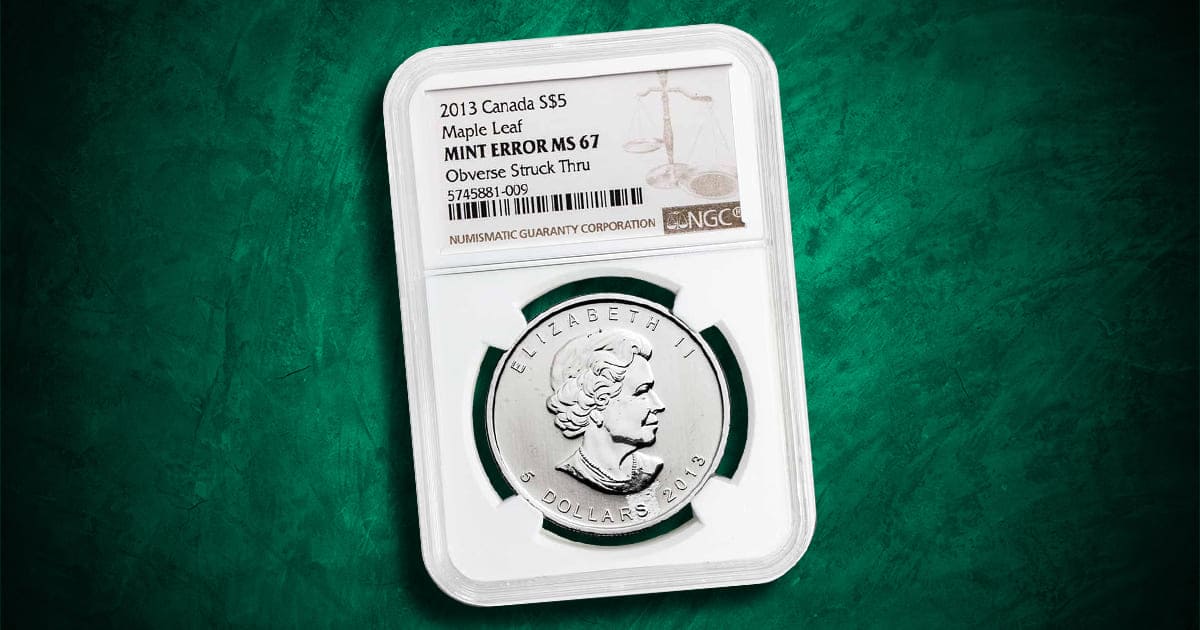
A Guide to Error Coins
Error coins are coins that have man-made or mechanical errors. The errors occur either on the planchet, the dies or in striking. Sometimes an error is man-made and intended. Mechanical errors are generally unintended errors that happen unexpectedly.
Planchet Errors
Blank Planchet
A blank planchet error is one where the punched disks that are intended to be struck by the dies are not struck. They might be ejected prior to striking. If the blank is not struck it is usually a Type 1 error. If they have had uniformly rounded rims added via an upending mill machine and they are not struck, it is a Type 2 blank planchet.
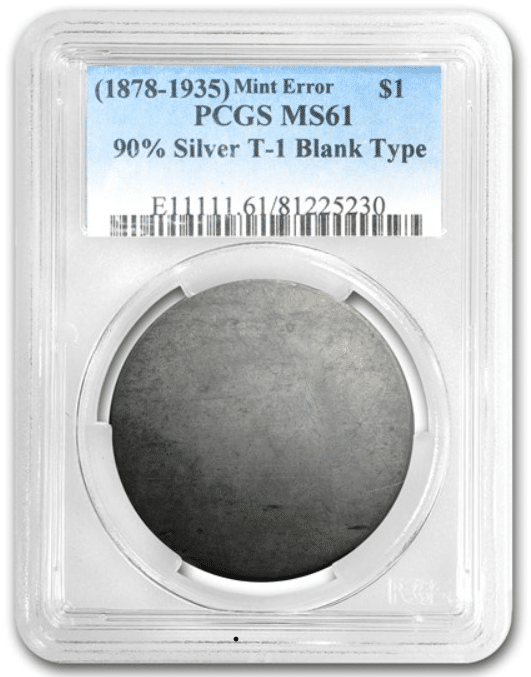
A Type 1 Blank Planchet Error.
Clipped Planchet
A clipped planchet usually occurs when the metal strip for the coins is misfeeds through the blanking machine unevenly. Sometimes the punch strike overlaps the straight edge or overlaps the hold punched for a previous coin. The clip can be small or large and either straight or curved.
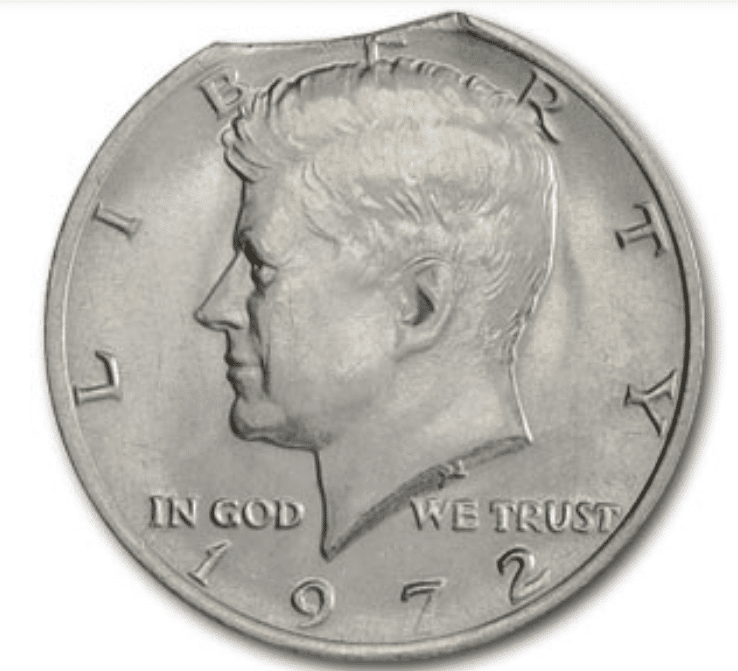
Other Planchet Errors
Wrong metal, improper thickness, cracked or chipped planchets. Lamination errors, where the planchet metal separates.

Die Errors
Doubled Die Error
A doubled die occurs when a misaligned striking impression from the hub strikes the planchet. It is not a re-punched die.
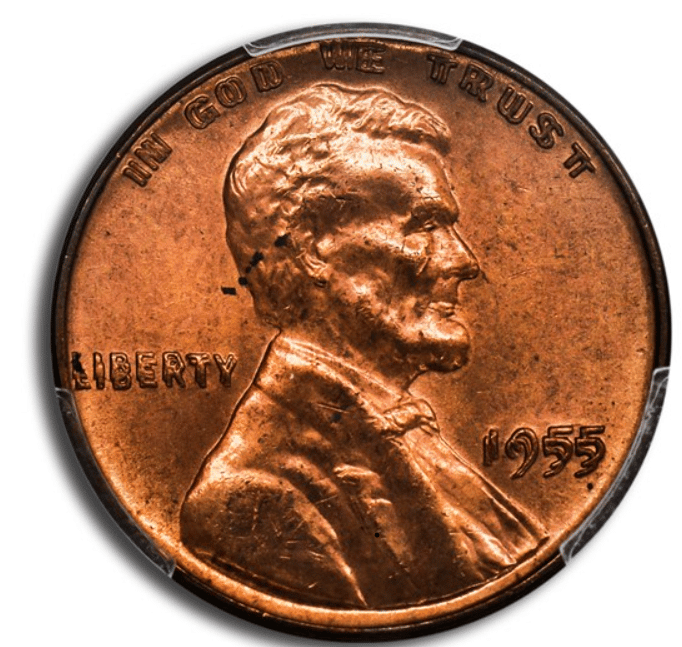
A 1955/55 Doubled Die Lincoln Cent.
Die Clash
A die clash happens when the obverse and reverse dies strike one another without a blank planchet between them. This may cause damage to each die. In fact, parts of each die may be impressed into one another, and those incorrect die elements are now impressed into the new coins that are struck.
Overdate
Because of the cost and difficulty of making new does, the mints often used a die until it shattered. They would take last year’s die and replace the last digit in the date with a new digit. A similar thing could happen with mintmarks as the Philadelphia Mint would often share dies with the branch mints and those mints with each other.
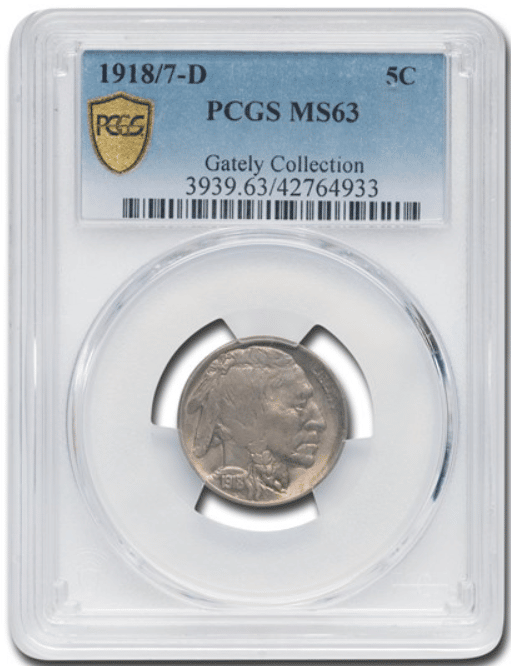
1918/17-D Buffalo Nickel Overdate Error.
Striking Errors
Broadstrike Error
A broadstrike error occurs when the circular die surrounding the lower die permits the flowing metal to go outside the die. It results in the coins have plain and not reeded edges. The collar normally prevents the flowing metal from escaping from the die itself.

1921 Morgan Dollar with a Large Broadstrike Error.
Strike-Through Error
A strike-through error occurs when a foreign object comes between the die and the blank when it is being struck. The foreign object becomes impressed into the blank’s surface, and it distorts the finished product. Wire from a brush, string from a rag used to polish the dies, even grease that fills the die are often the culprits filling the dies instead of metal.
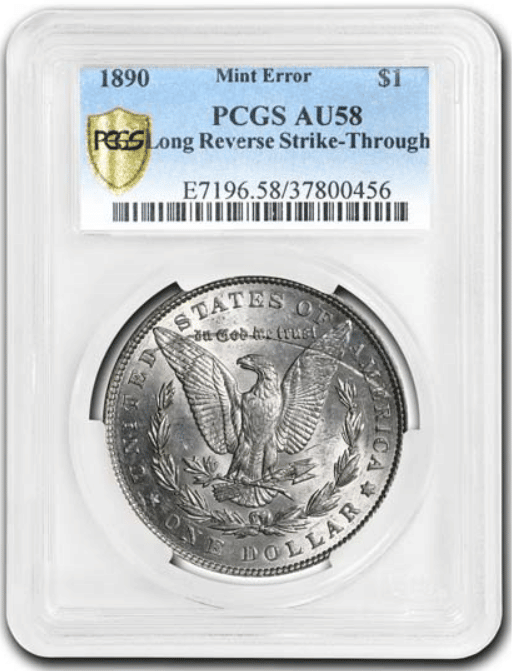
A Strike-Through Error on a Morgan Silver Dollar.
Brockage Error
A brockage error happens when the mirror image of one side is struck onto a blank. If the struck coin fails to automatically eject from the collar when a new blank is fed on top of the struck coin and the die. This creates a reverse impression onto the opposite side of a coin, this is a dramatic and desirable error.
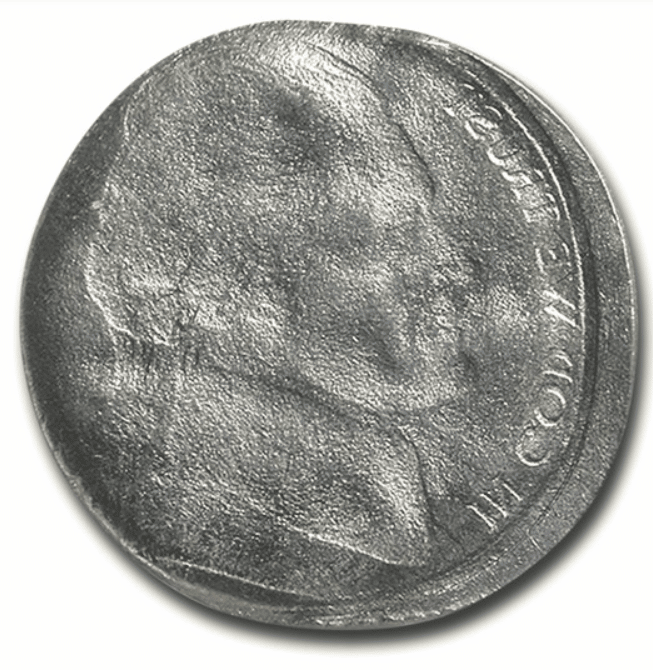
A Reverse Brockage Error on a 1999 Jefferson Nickel.
Multiple Strike Error
A multiple strike error involves a coin that has been struck numerous times and you can see multiple images or multiple coins are involves and struck and stuck together, A dramatic error.

A Multiple Strike Error.
Off-Center Striking Error
Off-center errors are produced when a coin is struck off-center. The die being punched is not in the center of the coin, it is closer to the edge. The coin is no longer circular when that happens. The greater the amount of off-center strike, the scarcer and more valuable the coin becomes. Off-center coins with dates are the most desirable of all of these errors.

A 1972-D Off-Center Lincoln Cent.
Double Denomination Error
This dramatic error occurs when a coin is struck twice between two different denominations of coins. Again, a scarce and dramatic error.
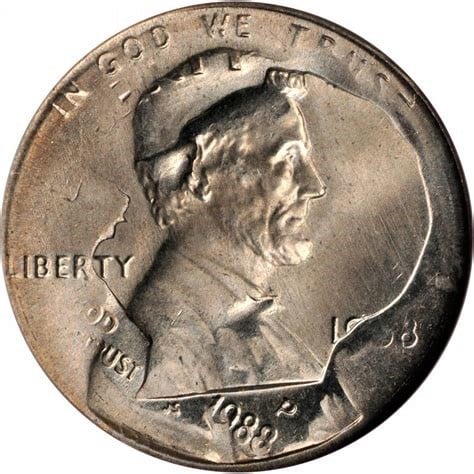
An Eleven-Cent Coin, struck by Lincoln Cent dies as well as struck by Roosevelt dime dies.
Wrong Metal or Planchet Error
Coins may be struck on the wrong planchet or on a planchet made of the wrong metal. This usually happens when the coin is being struck and the wrong dies may be used or the wrong metal or planchet is accidentally substituted for the correct one and fed into the press.
All of these types of errors are highly prized by dealers and collectors as they generally happen infrequently. The error below is very scarce in that the metal is almost correct. This Ukrainian coin is supposed to be struck on a .999 Fine planchet when instead it was struck on a Sterling .925 planchet which is very hard to detect, except usually non-invasive electronic measures.
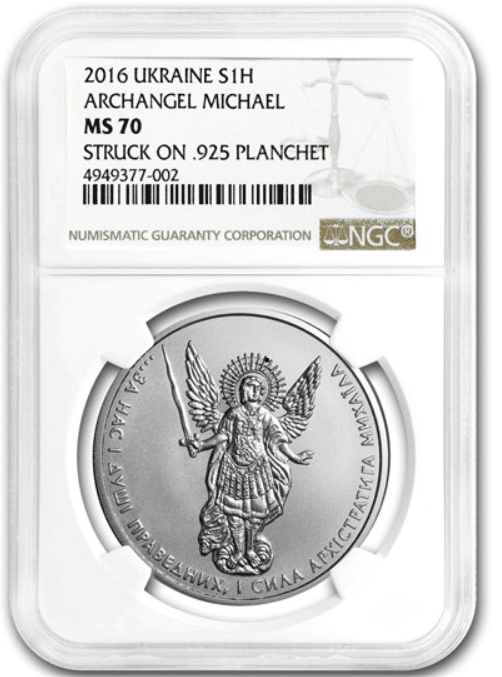
A 2016 Ukrainian coin struck on a Sterling Planchet instead of being struck on a .999 Fine Planchet.
incoln penny in the world.
:max_bytes(150000):strip_icc():format(webp)/US0001-Lincoln-Wheat-1914-S-MS66-RD-59c45bc2aad52b0011bd09be.jpg)
:max_bytes(150000):strip_icc():format(webp)/US0001-Lincoln-Wheat-1944-D-Steel-56a178c85f9b58b7d0bfa14b.jpg)
:max_bytes(150000):strip_icc():format(webp)/US0001-Lincoln-Wheat-1909-S-VDB-MS66-RD-56a178c03df78cf7726afc78.jpg)
:max_bytes(150000):strip_icc():format(webp)/US0001-1872-Indian-Head-Cent-MS66R-59c45cee68e1a20014875991.jpg)
:max_bytes(150000):strip_icc():format(webp)/US0001-1969S-Dbl-Die-obv-Lincoln-Cent-obv-lg-5702f7e85f9b581408a9f60c.jpg)
:max_bytes(150000):strip_icc():format(webp)/US0001-Lincoln-Wheat-1926-S-MS65-59c45da96f53ba00105d5460.jpg)
:max_bytes(150000):strip_icc():format(webp)/US0001-1877-Indian-Head-Cent-Example-56a177765f9b58b7d0bf91fd.jpg)
:max_bytes(150000):strip_icc():format(webp)/US0001-Lincoln-Wheat-1914-D-MS65-RD-56a178c25f9b58b7d0bfa110.jpg)
:max_bytes(150000):strip_icc():format(webp)/US-1864-1C-Bronze-L-on-Ribbon-PR64-Red-56a1792c3df78cf7726b0095.jpg)
:max_bytes(150000):strip_icc():format(webp)/US0001-Lincoln-Wheat-1943-Bronze-Cent-59c45f6c519de2001011088e.jpg)
:max_bytes(150000):strip_icc():format(webp)/US0001-Flying-Eagle-1856-MS66-59c45fee03f4020010c5e205.jpg)
:max_bytes(150000):strip_icc():format(webp)/US0001-Lincoln-Wheat-1909-Matt-Proof-PR67-59c460b4845b340011e6b32a.jpg)
:max_bytes(150000):strip_icc():format(webp)/US0001-Lincoln-Wheat-1943-S-Bronze-AU-58-59c4613368e1a20014885ac3.jpg)
:max_bytes(150000):strip_icc():format(webp)/US0001-Lincoln-Wheat-1958-Doubled-Die-obv-c883908858534237a0ab3742511a6a8d.jpg)
:max_bytes(150000):strip_icc():format(webp)/US0001-Lincoln-Wheat-1944-S-Steel-MS66-59c461d30d327a0011b8549a.jpg)
:max_bytes(150000):strip_icc():format(webp)/US0001-Lincoln-Wheat-1943-D-Bronze-59c462829abed5001145ee63.jpg)

No hay comentarios.:
Publicar un comentario